
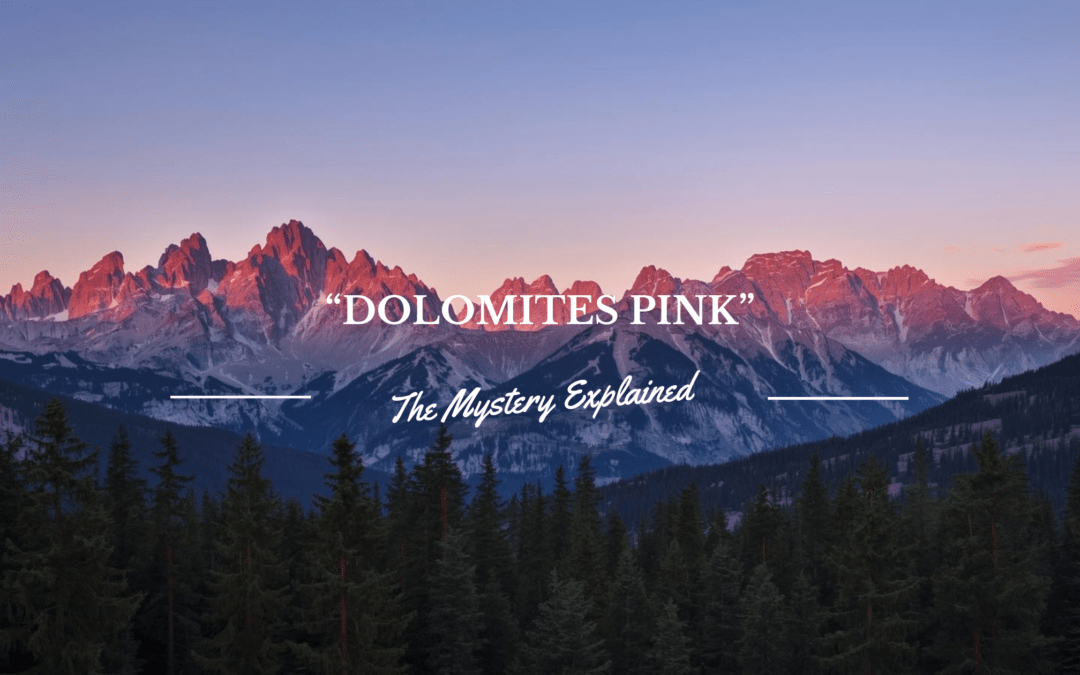
Have you ever wondered why the Dolomites turn pink at sunset? There is a secret appointment in Cortina d’Ampezzo for which you don’t need a ticket. It has no fixed schedule and depends entirely on the mood of the sky.
It is technically called Enrosadira, but the world simply knows it as the magic of the “Pink Mountains”.
Those who have been to the Western Alps or other mountain ranges know that the peaks usually fade into gray or dark blue when the sun goes down. Here, the impossible happens. A few minutes before the sun disappears, the rocky walls seem to catch fire. This unique spectacle where the Dolomites turn pink transforms the landscape from warm orange to mystical violet.
It is not an Instagram filter. It is a geological and mythological magic that makes Cortina unique in the world. But what is really behind this phenomenon?
The Scientific Explanation (The Magic of Stone)
For geologists, the answer is fascinating but technical. The Dolomites are not “normal” mountains. They are ancient coral reefs that emerged from the tropical sea over 250 million years ago.
Their rock, called Dolomite, has a unique composition: double carbonate of calcium and magnesium. This structure acts like a natural mirror for the sun’s light frequencies when the rays are low on the horizon.
The rock captures the light, holds it, and reflects it. This chemical reaction is the scientific reason why the Dolomites turn pink with a chromatic power that has no equal in nature. It is as if the mountain had its own internal light.
The Legend of King Laurin (The Heart of Tradition)
If you ask an old local from Ampezzo, however, they will tell you a different story about why the Dolomites turn pink. It is a tale of love, pride, and roses.
The legend tells that once these peaks hosted the kingdom of King Laurin, monarch of a people of dwarves. His greatest boast was a splendid rose garden (“Rosengarten”) that covered the mountains.
One day, the King kidnapped the beautiful Princess Similde. However, the knights of the kingdom managed to locate the King’s hideout precisely thanks to the bright color of the roses.
Defeated, King Laurin cast a curse: “No one shall ever see the beauty of my roses again, neither by day nor by night”. He petrified everything into gray rock.
But the King forgot a detail: the twilight. Sunset is neither day nor night. That is why, in that suspended moment, the curse breaks. King Laurin’s roses bloom again, ensuring that the Dolomites turn pink for a few minutes every evening.
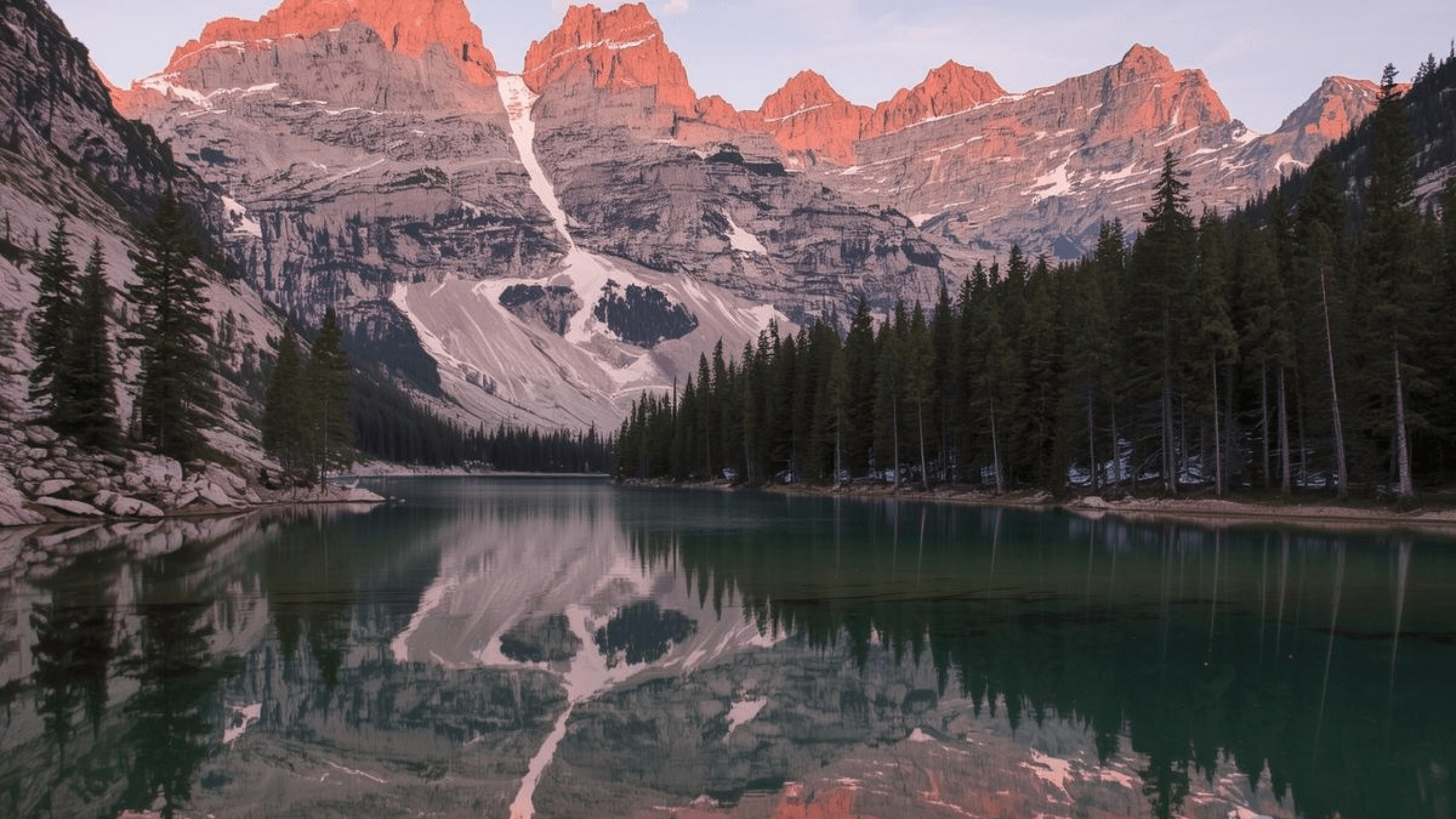
The 3 Best Spots to Admire the Spectacle in Cortina
Seeing the Dolomites turn pink is not just “watching a sunset”. It is an experience that must be sought by positioning yourself in the right place. Here is where to go:
-
Lake Ghedina: For those who love reflections. The fiery walls mirrored in the emerald green water create a hypnotic double spectacle.
-
Lagazuoi Refuge: For those who want to touch the sky. At almost 2800 meters, here you are inside the phenomenon. The terrace offers a 360-degree view that will make you feel on another planet.
-
Belvedere of the Cinque Torri: For the iconic perspective. The rock towers look like giant fingers trying to grasp the last rays of sun. It is the absolute reference point for photographers.
Visiting Cortina without waiting for the sun to go down is like going to the theater and leaving before the last act. Take your time and let the legend of King Laurin envelop you.
Discover the Authenticity of Veneto
Do you want to discover many other stories and curiosities about the legends of the Dolomites and the secret spots of Veneto? Do you want to receive tips on scenic refuges and unique itineraries? Read our articles to find out much more. Immerse yourself in the heart of nature and live the magic of the most beautiful mountains in the world.
Take the ATVO bus and arrive directly in Cortina d’Ampezzo (Cortina Bus Station) in total comfort, ready to look up at the sky and witness in person the unique spectacle of the Dolomites turning pink!
Stay tuned to our articles for more ideas and inspiration for your next trip.